Record Number of Students in NM Science & Engineering Fair
Students compete in 73rd annual North Museum Science & Engineering Fair, presented by The Arconic Foundation
The 2026 NMSEF includes more than 250 student finalists, an increase of 39% over 2025 participation levels, and the largest level of participation since prior to the Pandemic.
(LANCASTER)—The public is invited to join families, fans and friends to see over 250 young scientists’ and engineers’ experimental projects as Lancaster and Lebanon County students in grades 6 through 12 as they present a diverse body of science projects at the North Museum Science & Engineering Fair (NMSEF), Thursday, March 12 at Millersville University. Student projects will be accessible to the public from 4pm to 6:30pm. The NMSEF Awards ceremony follows at 6:30pm.
The 2026 NMSEF includes more than 250 student finalists, an increase of 39% over 2025 participation levels, and the largest level of participation since prior to the Pandemic. More than 70 volunteers from a wide cross section of local educational institutions and STEM- focused businesses will judge the student projects representing 16 high schools and 12 middle schools.
The top two students’ projects from the NMSEF’s senior division—the Grand Champion and the Senior Champion—earn the right to travel to the International Science and Engineering Fair and compete with 1,700 of their peers from around the world in Phoenix, Arizona from May 9 through 15, 2026.
North Museum has been organizing the Science & Engineering Fair for 16 years, welcoming students in grades 6–12 from public, private, charter, online, parochial, and home schools. The NMSEF is one of just six fairs in Pennsylvania associated with the International Science and Engineering Fair (ISEF), the world’s largest international science competition for pre-college students.
“The North Museum is grateful for the ongoing generosity of our many sponsors, and their commitment to supporting access to STEM education opportunities for students in Lancaster and Lebanon Counties,” says Scott Downs, Director of Development and Strategic Partnerships. “We are also thankful for the outstanding contributions from our judges, volunteers and participating teachers and students.”
Dr. Dan Daneker, the museum’s Science Fair Coordinator, commented, “Seeing these young stemologists excited for their research is not only gratifying as a science teacher, but reassuring that the future is bright. The Science and Engineering Fair helps our young scientists and engineers learn if research is right for them. Coupled with the commitment of the local STEM community who rallies behind our students, the results are amazing!"
Those interested in sponsoring future science fairs to keep them free to all students should contact Scott Downs, Director of Development and Strategic Partnerships at sdowns@northmuseum.org.
The 2026 North Museum Science & Engineering Fair is sponsored by Electron Energy Company, Kenvue, Eurofins, the Lancaster County STEM Alliance, Matt Glick, Lancaster Area Sewer Authority, The Stangl Foundation and Millersville University.
List of Categories
NMSEF Categories (Senior Division)
- Animal & Behavioral Science
- Biochemistry & Biomedical Science
- Chemistry, Energy, & Materials Science
- Earth & Environmental Sciences
- Environmental, Engineering Technology & Robotics
- Microbiology
- Physics & Mathematics
- Plant Sciences
NMSEF Categories (Junior Division)
- Botany
- Consumer Science
- Earth Science
- Engineering
- Life Science
- Physical Science
###

A Slew of Seeds—LNP Home & Garden
North Museum has historic seed, plant specimen collection – and you can see parts of it soon
KARYL CARMIGNANI | For LNP | LancasterOnline
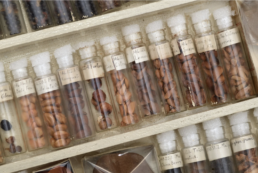
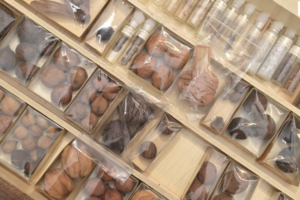
A collection of seeds from the North Museum, normally stored in the basement, will go on display March 20. Many of the seeds are tree nuts, including kumquat, lemon, grapefruit and tangerine.
Many Lancaster County families are already familiar with the North Museum’s natural wonders, from its live animal room to its planetarium. But did you know the museum is also home to well over 30,000 plant specimens — including a historic seed collection?

Molly Wolanski, exhibits and collection manager at the North Museum, knows the collection well. They’ve been with the museum since 2021, where their daily tasks can range from everything from “crocheting hats for dinosaurs, or dealing with an escaped snake,” Wolanski says. (The latter, by the way, has not happened since they upgraded the reptile enclosures.)
The pressed plants in the collection are mostly local specimens, Wolanski says. Dating back to the 1820s and 1830s and pressed onto paper just as old, they are exceedingly fragile. The seed collection came from a local dentist who had a penchant for plants. While the plant and seed collection is only available for research appointments, the public will soon get a glimpse of some of it.

Wolanski says they are excited to “pull vials of poisonous plant seeds” like castor beans for the upcoming exhibit “Nature Reimagined” open to the public March 20 through July 5. This exhibit explores the wild world around us through three smaller exhibits: Insects Reimagined, Journaling Nature and Poisonous Plants.
“This show features a variety of art forms featuring more traditional fine art media, fiber arts, and actual insects,” says Wolanski in an email. The Poisonous Plants portion explores the often maligned and feared plants we find in our world and the surprising history and science of these poisons, they add.
Plants featured will include poison hemlock, mountain laurel, rhododendron, deadly nightshade, and potato (the only edible part of the plant is the tuber; all green parts are toxic). Also, on display will be portions of the museum’s Materia Medica cabinet containing medicinal — and not-so-medicinal plants — from the 1800s, which was used in training new doctors in various remedies.
NATURE REIMAGINED
“Nature Reimagined,” opening March 20, will feature three exhibits: Insects Reimagined, Journaling Nature and Poisonous Plants. The latter will include 12 photographed pressed plant specimens from the herbarium. “Many people don’t realize how morbid natural history can be,” Wolanski says.
“Nature Reimagined” will include a cabinet from the 1890s which was used for pharmacy teaching. So many plants considered poison were used as medicine, Wolanski says. Or food. For instance, the “humble potato” is part of the deadly nightshade family (aka belladonna), a toxic perennial herbaceous plant, so centuries ago, folks were reluctant to eat it. “It took a while for the potato to become a culinary mainstay,” Wolanski says.
Groff’s seeds
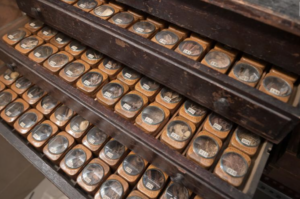
H.K. Groff, a local dentist, collected and methodically organized seeds in antique wooden cabinets. His “active collection and curation years” were 1939-1952, Wolanski says. Groff was also an ardent volunteer at the Stahr Hall Museum, the precursor of North Museum, and a passionate “amateur botanist,” the term used at the time. With 4,423 species of plants, the Groff seed collection represents species from around the country and beyond. “He tried to get a little of everything from around the world,” Wolanski says. Peering at the plethora of seeds, the diversity is unmistakable. Wolanski marvels at the different shapes of acorns: some are long and skinny, some short and round. The caps are also different.
“Often we look at plants in nature in isolation from their taxonomic relatives, and once they are grouped together it’s easier to compare and contrast their differences,” Wolanski says. The seed collection “is almost like a physical, nonportable field guide or library.”
The seed drawers are neatly divided with each vial and baggy (for jumbo seeds like acorns) labeled with a number indicating plant family, the species, and where it was collected. Wolanski says that Groff had a “unique numbering system”; the seeds are also listed in a modern-day spreadsheet. While Groff was an avid seed collector, seeds collected by other botanists have been stored with his, with some dating back to the 1860s collected by Abram P. Garber, adds Wolinski.
Wolanski says that while some botanists had “surprisingly nice handwriting,” it was still a relief when people started using a typewriter for specimen labels. They say that the pool of people able to read cursive handwriting is shrinking with many schools doing away with teaching cursive. But “1800s cursive is a different beast,” they add. Wolanski explains that the seeds in the collection are vintage seeds, not heirloom seeds which exist through Natural Selection. “This is a record of plant seeds from around the 1900s, au natural.”
The herbarium
In addition to the carefully catalogued seeds, the North Museum also has a significant herbarium — a collection of plant specimens and data used for scientific study. The 1986 keepsake book “The North Museum and the Natural History Tradition of Lancaster County” says that “given the size of the North Museum, the herbarium is impressive” and ranked it the fourth largest in the state of Pennsylvania.
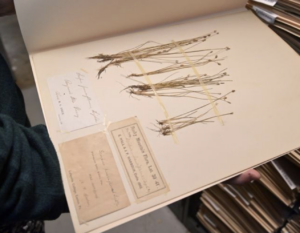
The herbarium contains flowering and non-flowering plants like ferns, mosses and algae. The seed collection has been “particularly useful to archaeologists as a reference for plant utilization by prehistoric American Indians,” says botanist Jane Grushow in the book. “The herbarium is in fact a testimony to the great plant diversity that once existed in Lancaster County. Sadly, many of the wild places recorded in the herbarium have been built upon, drained, or used as dumps or landfill, thus destroying the original plant life,” Grushow adds.
For instance, there are diverse seed specimens — 177 records — from the Dillersville Swamp, an area now covered in housing and mall development. Wolanski says the oldest specimen was collected in the 1860s by Thomas C. Porter, another renowned botanist.
“There are over 100 species represented in those 177 samples,” Wolanski says. “There are common garden favorites like pussy willow, orange coneflower, and black-eyed Susan, as well as other native species like skunk cabbage, goldenrod, and poison sumac.” Wolanski says they used to see murders of crows circling above in the Dillersville area. Could the birds be recalling their wild ancestral habitat of yesteryear? “In this time of rapid change, we need to know what was once there, to help protect what’s left,” Wolanski says.
A moss collection made by Thomas Porter, a professor at Franklin & Marshall College, are dehydrated specimens in individual packets. Wolanski says that moss pre-dates roots and seeds. “It’s one of the original forms of plant life on land.”
Be your own botanist
Plant specimens are no longer being added to the North Museum’s herbarium; rather, they are being preserved for future scientific endeavors. Wolanski says that while the amateur botanists documented where the specimen was collected, “they didn’t have specific geo-data back then.” These days, the exact longitude and latitude would be noted — a cell phone photo of the specimen contains the geo-data automatically.
Wolanski recommends the phone app iNaturalist for newbies to learn what they’re looking at by taking a photo. Once in the app, “your photo could be included in a research study.” Wolanski says SEEK is a good app for younger naturalists.
And, of course, a visit to the museum can help further bolster their scientific knowledge.
“We’re here, we exist, come visit North Museum to learn about the natural world and what we have before it’s gone,” Wolanski says.
KARYL CARMIGNANI | For LNP | LancasterOnline

Lancaster is Bugging Out!
Visit North Museum's Imagining Insects exhibition to see what everyone is bugging about!
Nov 5, 2025. LNP Entertainment Section front page coverage.

GSK Science in Summer–Success!
LANCASTER, PA AREA STUDENTS STEP INTO THE ROLE OF ATHLETIC TRAINERS, CARDIOLOGISTS, DIETITIANS, AND MORE WITH FREE SUMMER SCIENCE PROGRAM

GSK Science in the Summer™ Camps a Success in 2025. Over 7% more student participation compared to 2024.
Lancaster, PA. August 8 — GSK Science in the Summer™, a free science program for students in grades 2 through 6, returned in 2025 with a new theme: Be a Health Scientist!
This summer, nearly 1,000 children in the Lancaster area joined thousands more GSK Science in the Summer™ students nationwide as they learned the importance of space science through fun, hands-on, age-appropriate experiments at local community organizations. That's an increase in student participation by over 7% when compared to 2024!
The 100% free STEM enrichment program offered students the unique opportunity to become real scientists and engineers, engaging in hands-on activities that, in 2025, brought the world of health science to life. They discovered different career paths, from athletic trainer to epidemiologist, solved real-life problems, and built critical thinking skills—all while asking big questions like, what affects our health? How can we prevent illness? How do we help people heal?
Supported by GSK and led by The Franklin Institute, the program was administered through: Lampeter-Strasburg SD, Lancaster Public Library, Manheim Township Parks, The Mix, and YMCA of the Roses. The 100% free STEM enrichment program, now in its 39th year, estimates a reach of 23,400 students across 450 organizations in under-resourced communities while it provided professional training to approximately 500 educators, helping them develop skills to provide high-quality informal STEM experiences for youth nationwide.
Through hands-on activities, students took on the roles of athletic trainers, cardiologists, dietitians, epidemiologists, and orthopedic doctors. They designed tools to unclog arteries, test beverages for vitamin C, track how illness spreads through communities, and more—all while practicing scientific skills like observation and hypothesis testing.
Each Be a Health Scientist! activity told a story that invited students to play the role of someone in that field.
Be an Athletic Trainer: Members of a sports team report various knee problems during training. Students tested the strength and mobility of their knee joints using models and chose appropriate training exercises for each player to improve their knee function.
Be a Cardiologist: A person with heart problems has been diagnosed with a blockage in one of their arteries. Students used a model to investigate how the blockage affects blood flow in the artery and then designed a tool to clear the blockage and improve the patient’s blood flow.
Be a Dietitian: A patient needs more Vitamin C in their diet but struggles to find ways to get it. Students tested the Vitamin C content of drinks to see which one(s) can help the patient the most.
Be an Epidemiologist: An illness is spreading through a school community, and it is the student’s job to find out what is going on. They used a model to explore how illnesses spread, locate the source, and suggest ways to prevent it from spreading further.
Be an Orthopedic Doctor: A hockey player has broken a tibia bone in their lower leg. Students designed and tested a solution for keeping the broken bone aligned and supported while it heals.
GSK Science in the Summer™ was created in Philadelphia as part of GSK’s commitment to supporting accessible STEM education, and the program has reached more than 400,000 children across the US since its launch.
“By bringing scientific concepts to life through fun, hands-on learning opportunities, GSK Science in the Summer™ gives students tangible examples of the types of STEM career paths they can pursue in their future,” said Maya Martinez-Davis, President, US at GSK. “We see the power of science in action every day at GSK, and we’re proud to help inspire the next generation of scientists through this program.”
“GSK Science in the Summer™ aims to increase youth interest and confidence in doing science and pursuing STEM careers, especially those in under-resourced communities,” said Dr. Darryl Williams, Senior Vice President of Science, Education, and HR at The Franklin Institute. “The Franklin Institute recognizes that when youth have high-quality, positive STEM experiences outside of the school setting with educators with whom they closely identify, it increases their positive STEM identity and allows them to see themselves as belonging in science, and year after year, this program excels at doing that."
The Franklin Institute develops the GSK Science in the Summer™ curriculum, freely available at scienceinthesummer.fi.edu.
Note to Editors/Press Kit: Be A Health Scientist! Images
North Museum of Nature and Science
Now in its 72nd year, the North Museum of Nature and Science impacts thousands of central Pennsylvania students and their families annually through its education initiatives in the Museum, in the community, and at home. Programs include field trips, early childhood education programs, summer camps, the Science and Engineering Fair for middle and high school students, and many other educational programs designed to create access to free and reduced-cost STEM learning opportunities, and strengthen the foundation of youth in the Lancaster community and beyond.
The Franklin Institute
Located in the heart of Philadelphia, The Franklin Institute is a renowned and innovative leader in the field of science and technology learning, as well as a dynamic center of activity. As Pennsylvania’s most visited museum, it is dedicated to creating a passion for learning about science by offering access to hands-on science education. For more information, visit www.fi.edu.
GSK
GSK is a global biopharma company with a purpose to unite science, technology, and talent to get ahead of disease together. For further information, please visit www.us.gsk.com.
MEDIA CONTACTS:
Stefanie Santo, The Franklin Institute, 215.448.1152, ssanto@fi.edu
Kate Kanaby, GSK, 484.843.0993, kate.l.kanaby@gsk.com
###
The Art Gallery posts Open Call For Art—Entry Deadline: Sept 12
OPEN CALL FOR ART — HEXAPODAN DAYS
Insects surround us. Whether beneficially pollinating our gardens or spreading disease, insects leave their mark. They forage, they swarm, they camouflage, they predate. They communicate and learn socially, they metamorphosize, they create a hive mind. They help us mark the seasons, they challenge our picnics, and inspire us to create science fiction movie monsters. Gardens are habitat for insects. They are mini ecosystems or even wild places within the footprint of our domestic space. From as small as a container to as large as a meadow, the garden is a refuge for wildlife and a place to contemplate nature.
Does your work look to the natural world and our place within it? Do you contemplate the future of biodiversity in our wild spaces?
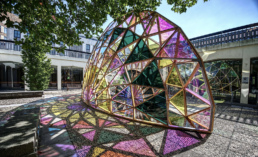
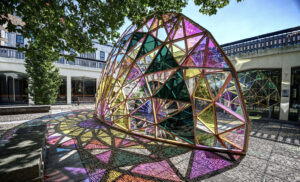
Artist Luke Jerram says, “Referencing the stained glass windows and bell towers of the Duomo in Florence, Palm Temple is both an experimental optical pavilion and a contemplation space designed for the public to consider the impact humanity is having on nature.”
Where do you go to contemplate nature? When you look to insects what do you find? When have you felt awe in the presence of Hexapoda?
The North Museum of Nature & Science invites regional artists to explore their relationship to the insect world, gardens, and our greater impact on biodiversity found within wild spaces more broadly. Diverse interpretations are encouraged. All details and requirements are in the Application Form below.
Eligible Work: Original 2d artworks created within the last three years solely by the artist.
Eligible mediums include:
- Paintings
- Drawings
- Pastel
- Collage
- Mixed media
- Monotypes
- Etching
- Photography
- Digital photography
- Digital painting
- Low relief works that project no more than about 4 inches from the wall.
ART SUBMISSION FORM LINKED HERE
Entry Deadline: Sept 12
Jury results: Sept 16
Exhibit: Oct 2–Jan 5
Molly Wolanski, Exhibits and Collections Manager
Response to Executive Orders
North Museum Response to Executive Orders
The list below is a record of North Museum responses or mentions as they pertain to the president's executive orders to reduce or cut federal budgets.
June 8, 2025
LNP Opinion: The Gutting of Science in the US Could be Catastrophic
by RICHARD D. CLARK | Vice President of North Museum of Nature and Science Board of Directors

In March, 2025 President Donald Trump signed an executive order that directed IMLS and six other federal agencies to “be eliminated to the maximum extent consistent with applicable law.” Thereafter, IMLS placed its entire 70-member staff on administrative leave. Here is a list of news clips where North Museum was quoted or referenced in connection to that news.
April 13, 2025
3 views of how actions in DC are affecting Lancaster County residents
by SAM BRESSI I LNP Op-Ed
April 13, 2025
LNP's online editorial regarding the impact of IMSL
by SARAH NICELL | Staff Writer
April 11, 2025
Tens of thousands of dollars revoked in Lancaster County as Trump dismantles humanities agency
by SARAH NICELL | Staff Writer
Apr 5, 2025
LNP - Financial Flog, Local Library and Museum Officials Continplate Uncertain Future if Government Money Dries Up
by SARAH NICELL | Staff Writer
April 3, 2025
LNP - Distress for Lancaster County museums and libraries as Trump dismantles federal agency
by SARAH NICELL | Staff Writer
Lancaster Science Fair Winner—Now International Winner!
Hempfield High School Student Brings Home Top Honors at the World’s Largest International Science Competition
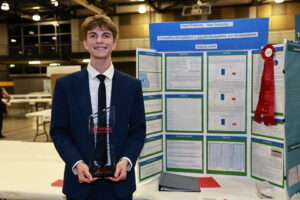
Hempfield High School junior Ethan Albright was awarded 3rd place in the Materials Science category at the International Science and Engineering Fair (ISEF) last week, held in Columbus, Ohio. His winning project, “Reel Problems. Reel Solutions. Combating Microplastics in Aquatic Ecosystems with Biodegradable Fishing Lures,” had earned Albright the Senior Division Champion award at the North Museum Science & Engineering Fair (NMSEF) in March 2025.
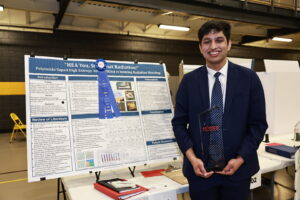
NMSEF’s 2025 Grand Champion Ansh Dwivedi, a senior at Warwick High School, also competed at ISEF, which is the world’s largest international science competition for pre-college students.
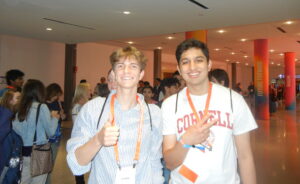
The two Lancaster County students traveled to Columbus to compete among 1,657 other students from 63 countries. North Museum paid all registration fees, travel and accommodation expenses to provide the two winning student competitors with this opportunity.
Albright’s win marks the first finalist award for an NMSEF champion since 2017. He is the son of Jennifer and Justin Albright. Warwick High School chemistry teacher Doug Balmer, who accompanied the two students to ISEF, noted the support of local educational resources in the students’ preparations.
“Millersville University allowed Ansh to use its scanning electronic microscope (SEM) and X-ray photoelectron spectrometer (XPS) free of charge,” he said, “and Ethan was able to come to Warwick and use the infrared spectrometer (IR) and poster plotter.”
The 2026 Science & Engineering Fair will be held at Millersville University on Thursday, March 12, 2026, and is one of just six fairs in Pennsylvania associated with ISEF. Students from every public school district in Lancaster and Lebanon Counties, as well as all private, charter, online and home schools are invited to enter the competition. Next year’s competition will begin with registration in October 2025, and is free of charge to all participating students.
The NMSEF has been a staple of science education in Lancaster County for 72 years, inspiring thousands of young researchers to create, design and discover the joys of science and engineering through their projects.

North Museum’s Cosmic Bash is supporting STEM Education by “Powering the Future.”
North Museum’s Cosmic Bash is supporting STEM Education by “Powering the Future.”
Saturday, May 17 at Foundry48, Lititz
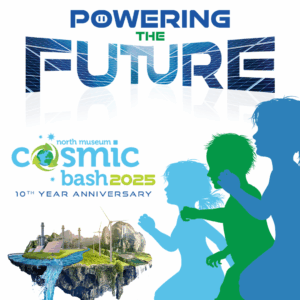
(LANCASTER)—The innovative ways we can source renewable energy on planet earth will be featured at North Museum’s biggest fundraiser of the year, Cosmic Bash, presented by Atomic, on Saturday, May 17. Tickets are now available at northmuseum.org/cosmic-bash/. Hosted by WGAL News8 anchor and award-winning reporter Susan Shapiro, the event benefits the museum’s many STEM education programs, and includes a silent auction reception, an irresistible live auction, scientific exhibits, a gourmet dining experience curated by Rettew’s Catering, and live music by Temple Avenue Jazz.
“Guests at this year’s Cosmic Bash will embark on an unforgettable adventure as we continue our mission of inspiring curiosity, discovery and a lifelong appreciation of nature, science and cultures,” said North Museum’s CEO Andrea Rush. “All sponsorships, donations, and monies raised will crucially benefit free and reduced-cost STEM education programs for children in Lancaster County and central Pennsylvania.”
Single tickets for the Cosmic Bash are $175, available by clicking here. The 10th annual signature fundraiser is presented by ATOMIC.
Sponsors include: Atomic / First National Bank / Rhoads Energy / EnerSys / Anne & David Lloyd / Pippa & Tom McPhillips / Susan & Richard Seavey / Jim Steltz / Lancaster County Workforce Development Board / American Crane & Equipment Corporation / Marysia & Salvatore Dina / Richard Clark, Ph.D. & Sepi Yalda, Ph.D. / Fulton Bank / Bernadette & Eugene Gardner / Hall Media Solutions / High Companies / Lancaster Country Day School / Dr. Clark McSparren / Northwest Bank / Penn Medicine Lancaster General Health / Richter Precision / RKL, LLP / Trout CPA / WEBBER/SMITH Associates / Cargas / ELA Group, Inc. / American Society for Military Engineers, Philadelphia Post / Garber Metrology / RETTEW / Dr. Victoria & Steve Zuckerman / Linda & Doug Weidman /Eudora Roseman / Turner Buick GMC / Hummer Turfgrass Systems, Inc. / Regupol America, LLC / Sauder's Eggs / Ron & Diane Umble / Radius Mobile Bike Shop
Media Sponsor: WGAL 8 / Uproot Creative Services / Sam Soliman Photography /
Now in its 73rd year, the North Museum impacts thousands of local students and their families annually through its education initiatives in the Museum, in the community, and at home. Programs include field trips, early childhood education programs, summer camps, STEM Sisters, the Science and Engineering Fair for middle and high school students, and many other educational programs designed to create access to free and reduced-cost STEM learning opportunities and strengthen the foundation of youth in the Lancaster community and beyond.

GSK Science in the Summer–Back for 2025!
GSK supported and in collaboration with The Franklin Institute's curriculum, the 2025 program will focus on Health Sciences.
The program, in its 39th year, has reached an estimated 23,400 nationwide!
Are you an organization looking to host a summer science camp? Look no further! North Museum of Science and Nature connects organizations looking to host a summer camp at their location with Science in the Summer curriculum, materials, and training.
Last year 902 area students, ranging from Pre-K through grade 12, completed GSK's (GlaxoSmithKline's) Science in the Summer™ program! That was a record number of attendees, increasing the impact of this already popular seasonal program.
This summer's theme will be "Health Sciences," and it will offer students the unique opportunity to step into the shoes of real scientists and engineers, engaging in exciting hands-on activities that bring the world of health science to life. Students will discover different career paths, from dietitian to orthopedic doctor, and develop their scientific thinking skills in a fun and interactive way.
Download the Health Sciences Overview
This program is made possible by a generous grant from GSK and with curriculum developed by The Franklin Institute.
The North Museum, GSK, and the Franklin Institute are longtime collaborators on the Science in the Summer program, which primarily targets students in grades 2 through 6, with an emphasis on reaching those from underserved communities and lower income households.
"Thanks to GSK and the Franklin Institute we were able to reach over 900 students last summer,” says Kate Wilson, Senior Manager, Visitor & Volunteer Services. “This free program offers a hands-on look at various STEM careers which many students did not even know existed! Now they might want to pursue those paths in the future. This is an opportunity some of the members of our community would not normally have access to due to financial and other constraints. We look forward to offering this program each year, and can't wait for 2025!"
As a leader in STEM education and advocacy, the North Museum is proud to present GSK's Science in the Summer™ program to the community for many years, and is deeply grateful to GSK for their ongoing commitment to enriching the community through the utilization of and access to quality STEM education programs, and the exceptional curriculum provided by the Franklin Institute.
If your organization has an interest in participating in GSK's 2025 Science in the Summer™ program, presented by the North Museum, please contact Kate Wilson, Senior Manager, Visitor & Volunteer Services at 717.358.4116, kwilson@northmuseum.org.
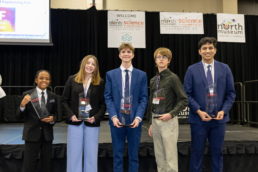
2025 Science Fair Winners Announced
NEARLY 200 STUDENTS COMPETED, 2 CHAMPIONS ON THEIR WAY TO ISEF
Photography by @anneoftheforest and Soliman Photo & Video
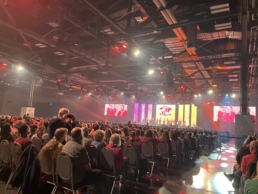
Nearly 200 students from 23 schools in Lancaster and Lebanon counties gathered at Millersville University on Thursday to show off their science projects at the North Museum Science & Engineering Fair. The students were vying for a chance to compete against 1,500 of their peers from around the world in May at the International Science and Engineering Fair in Columbus, Ohio. The fair’s junior division had 125 student competitors, while the senior division had 57. The regional competition, which North Museum hosts annually at MU, is one of six fairs associated with the international competition, and the top two projects in the senior division proceed to the world stage at no cost to the students.
For more, go to LancasterOnline.com.
(LANCASTER) March 13, 2025—North Museum congratulates all the students who competed at the 72nd annual North Museum Science and Engineering Fair, presented by Arconic Foundation! Our heart-felt thanks to the judges, coordinators, teachers, sponsors and all who make this fair a STEM success! Congratulations Ansh Dwivedi, Grand Champion, and Ethan Albright, Senior Division Champion, for winning top honors! They have both earned a place at the ISEF to compete with 1,700 of their peers from around the world! North Museum is honored to pay for registration, fees, travel, and accommodations for its two Champions.
For all senior and junior division category winners, visit our Science and Engineering Fair Winners Page.
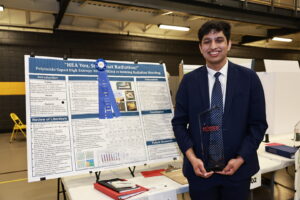 2025 Grand Champion
Ansh Dwivedi, Warwick High School, 12th Grade
Category: Chemistry, Energy, & Materials Science
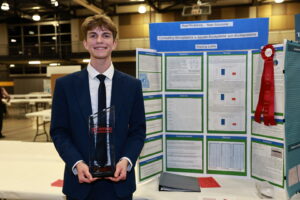 Senior Division Champion
Ethan Albright, Hempfield High School, 11th Grade
Category: Earth & Environmental Sciences
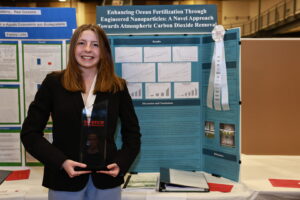 Senior Division Reserve Champion
Ella Strickler, Elizabethtown Area High School, 12th Grade
Category: Earth & Environmental Sciences
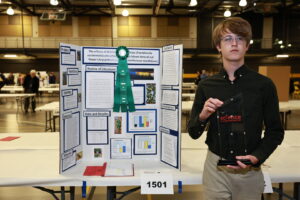 Junior Division Champion
Alden Hendricks, Lancaster Country Day School, 8th Grade
Category: Plant Science
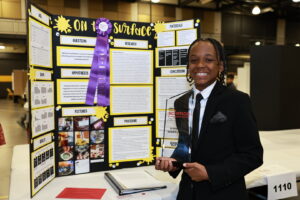 Junior Division Reserve Champion
Jermaine Edwards, Lancaster Country Day School, 8th Grade
Category: Earth Science
Photography by: Soliman Photo & Video