
History Made: NMSEF Students Earn International Honors
Lancaster Students Make History at World’s Largest Science Competition

(LANCASTER)—For the first time in North Museum Science and Engineering Fair’s 73-year history, a trifecta: three finalists in the local competition traveled to Phoenix, Arizona last week to participate in the International Science and Engineering Fair (ISEF), and each returned home with awards, honors and accolades.
Lancaster Country Day School senior Benedikt Kienle earned 1st in the ISEF’s Chemistry category, as well as receiving a full tuition scholarship to Westlake University, an all-expense paid trip to Sweden during Nobel week, and auxiliary awards Dudley R. Herschbach SIYSS and 2nd award by the American Chemical Society. Kienle’s winning project, “New Green Chemistry Iridium Catalysts,” had won Senior Champion at the North Museum Science & Engineering Fair (NMSEF) in March 2026. Kienle is a German exchange student.
NMSEF Grand Champion Ethan Albright, a Hempfield High School senior, was awarded 4th place in the ISEF’s Materials Science category for his “Bugged Out: A Novel Approach to Reforestation” project. Warwick High School senior Emily Stauffer competed in the ISEF as the NMSEF’s Senior Division Reserve Champion and captured ISEF’s 4th place in the Animal Sciences category with her project “Rats on Roughage: The Effects of Dietary Fiber on Rattus norvegicus.”
ISEF is the world’s largest international science competition for pre-college students. The three Lancaster County students traveled to Phoenix to compete among 1,725 other students from 65 countries from May 9 to May 15. “Accompanying our NMSEF winners to ISEF was an unforgettable experience,” said Todd Trout, Kienle’s science teacher at Lancaster Country Day School. “Seeing all three receive awards for their outstanding work made me very proud of them. I am appreciative of all who support the NMSEF.”
More than $7 million in awards and prizes were distributed at the 75-year-old event, which is the world’s largest global science competition for high school students. “Participating in ISEF allowed me to expand my professional network and gain inspiration from industry leaders like Dr. George Yancopoulos,” said Emily Stauffer. “More importantly, it provided a platform to channel my own health struggles into meaningful research, transforming a personal challenge into a drive for scientific discovery.” Stauffer plans to attend McDaniel College to major in Biochemistry as the first step toward medical school and a career as a gastroenterologist.
Warwick High School Chemistry teacher Doug Balmer, who also accompanied the three students to ISEF, noted the support of local educational resources in the students’ preparations: “Over 30 local businesses and individuals donated close to $11,000 to make this life-changing trip possible for the students.”
The 2027 North Museum Science & Engineering Fair will be held at Millersville University on Thursday, March 11, and is one of just six fairs in Pennsylvania associated with ISEF. Students from every public school district in Lancaster and Lebanon Counties, as well as all private, charter, online and home schools are invited to enter the competition. Next year’s competition will begin with registration in early Fall 2026 and is free of charge to all participating students. For additional information, please email sciencefair@northmuseum.org. “ISEF offers a unique opportunity for our students to connect with other young scientists, engineers, inventors and global STEM leaders,” said Dan Daneker, NMSEF Coordinator. “These impressive results are inspiring to our local sponsors, volunteers, judges and leadership.”
Support the Future of Student Science
The North Museum Science & Engineering Fair has inspired young researchers for more than 73 years and remains completely free for participating students. Community support helps make opportunities like ISEF possible—opening doors for local students to explore, discover, and compete on a global stage. Learn more about supporting NMSEF and helping keep the program accessible for all at North Museum Science & Engineering Fair.

Hempfield High School Senior named Grand Champion
Hempfield High School Senior named Grand Champion at 73rd North Museum Science & Engineering Fair

From among STEM-focused students in grades 6 through 12 from 23 Lancaster and Lebanon County schools, Hempfield senior Ethan Albright was named 2026 Grand Champion at the North Museum Science and Engineering Fair (NMSEF) on Thursday, March 12 at Millersville University. At the 2025 NMSEF, Albright distinguished himself as Senior Division Champion.
Read More on our Science Fair Winners Page.
Albright and his winning 2026 project, “Bugged Out: A Novel Approach to Reforestation” competed among more than 250 student finalists, an increase of 39% over 2025 participation levels, and the largest level of participation since prior to the Pandemic.
Senior Division Champion 2026 is Lancaster Country Day School senior Benedikt Kienle, for his project, “New Green Chemistry Iridium Catalysts.”
Both students are eligible to compete at the International Science and Engineering Fair (ISEF) at Phoenix, Arizona, May 9 through 15, among 1700 students from throughout the world in the largest international science competition for pre-college students. Should a student choose to attend, the North Museum underwrites the ISEF registration fee. Should the Grand Champion or Senior Champion choose not to attend, the Senior Reserve Champion will be eligible to attend ISEF.
Finalists also include Senior Division Reserve Champion, Emily Stauffer, Warwick High School, senior for “Rats on Roughage: The Effects of Dietary Fiber on Rattus norvegicus”; Junior Division Champion 8th grade student Alex Anspach, St. Leo the Great for “A Natural Solution: Using Polysaccharide Based Polymers in Fenugreek to Remove Microplastics from Water”; and Junior Division Reserve Champion 7th grade student Charlie Teachworth, Lancaster Country Day School, for “How Staging Affects the Power of a Gauss Accelerator.”
More than 70 expert judges from a wide cross section of local educational institutions and STEM-focused businesses reviewed the students’ projects. The NMSEF is one of just six fairs in Pennsylvania associated with ISEF.
“The North Museum is grateful for the generosity of our many sponsors, and their commitment to supporting access to STEM education opportunities for students in Lancaster and Lebanon Counties,” says Scott Downs, Director of Development and Strategic Partnerships. “Additionally, we are thankful for the outstanding contributions from our judges, volunteers and participating teachers and students.”
The 2026 North Museum Science & Engineering Fair is sponsored by Electron Energy Company, Kenvue, Eurofins, the Lancaster County STEM Alliance, Matt Glick, Lancaster Area Sewer Authority, The Stangl Foundation and Millersville University. Those interested in sponsoring future science fairs to keep them free to all students should contact Scott Downs, Director of Development and Strategic Partnerships at sdowns@northmuseum.org.
The North Museum has managed the Science & Engineering Fair in Lancaster County since 2009. The NMSEF has been a staple of science education in Lancaster County for more than 70 years, inspiring thousands of young researchers to create, design and discover the joys of science and engineering through their projects. The mission of North Museum of Nature & Science is to enable knowledge of nature and science by inspiring individuals, engaging communities, and connecting organizations.
###
Read More on our Science Fair Winners Page.
NMSEF 2026 Category Winners and Auxiliary Awards
Senior Division Category Winners
Animal & Behavioral Science
1st Place: Geno Falduts, Conestoga Valley High School, 11th Grade
2nd Place: Madison Gonzalez, Conestoga Valley High School, 11th Grade
3rd Place: Rosemary Jacobs, The Stone Independent School, 10th Grade
Biochemistry & Biomedical Science
1st Place: Claire Duan, Linden Hall School for Girls, 11th Grade
2nd Place: Shamil Issayev, Conestoga Valley High School, 10th Grade
3rd Place: Olivia Hagy, Ephrata High School, 11th Grade
Honorable Mention: Kylee Wood, Elizabethtown Area High School, 11th Grade
Honorable Mention: Nyana Perera, Veritas Academy, 11th Grade
Chemistry, Energy, & Materials Science
1st Place: Anya Dwivedi, Warwick High School, 10th Grade
2nd Place: Samantha Ilustre Do, The Stone Independent School, 10th Grade
3rd Place: Sona Rezhalova, J.P. McCaskey High School, 12th Grade
Honorable Mention: Kyle Reidenbaugh, Ephrata High School, 11th Grade
Honorable Mention: Timothy Breckbill, Ephrata High School, 12th Grade
Earth & Environmental Sciences
1st Place: Ruby Garner-Valle, J.P. McCaskey High School, 11th Grade
2nd Place: Benjamin Koser, The Stone Independent School, 10th Grade
3rd Place: Zoe Keller, Ephrata High School, 11th Grade
Honorable Mention: Owen Koser, The Stone Independent School, 9th Grade
Environmental, Engineering Technology & Robotics
1st Place: Kai Unwin-Wisnosky, JP McCaskey High School, 12th Grade
2nd Place: Bruce Burkholder, Ephrata High School, 12th Grade
3rd Place: Brady Shoff, Columbia High School, 11th Grade
Honorable Mention: Rojus Pauza, Lancaster Country Day School, 11th Grade
Honorable Mention: Pearly Mikhil, Ephrata High School, 10th Grade
Honorable Mention: Nicholas Reigner, Elizabethtown Area High School, 10th Grade
Microbiology
1st Place: Tirth Parikh, Manheim Township High School, 11th Grade
2nd Place: Anna Weidman, Ephrata High School, 11th Grade
3rd Place: Yi-Wen Liu, Dayspring Christian Academy, 12th Grade
Honorable Mention: Audrianna Resetar, Elizabethtown Area High School, 12th Grade
Honorable Mention: Kiera Navarich, Ephrata High School, 11th Grade
Physics & Mathematics
1st Place: Dev Marwaha, Conestoga Valley High School, 12th Grade
2nd Place: Hannah Szobocsan, Elizabethtown Area High School, 10th Grade
3rd Place: Connor Saxon, Elizabethtown Area High School, 10th Grade
Honorable Mention: Ethan Zhou, Lancaster Country Day School, 10th Grade
Honorable Mention: Landon Becker, The Stone Independent School, 9th Grade
Honorable Mention: Matt Savage, Ephrata High School, 10th Grade
Honorable Mention: Nehemiah Jackson, The Stone Independent School, 11th Grade
Plant Sciences
1st Place: Mariel Pasternak-Post, Lancaster Country Day School, 9th Grade
2nd Place: Emily Comerford, Ephrata High School, 11th Grade
3rd Place: Lily Wolfe, Ephrata High School, 11th Grade
Honorable Mention: Shepherd Todd, Warwick High School, 11th Grade
Junior Division Category Winners
Botany
1st Place: Lena Skiadas, Lancaster Country Day School, 7th Grade
2nd Place: Presley Clicqennoi, Ephrata Middle School, 8th Grade
3rd Place: Ira Chanko, Sacred Heart School, 7th Grade
Honorable Mention: Benson Shank, Landisville Middle School, 7th Grade
Honorable Mention: Finley Schulze, Our Mother of Perpetual Help School, 7th Grade
Consumer Science
1st Place: Arvind Jhaveri, Lancaster Country Day School, 8th Grade
2nd Place: Nolan Fidler, Lancaster County Christian School, 8th Grade
3rd Place: Eleanor Cavanaugh, Lancaster Country Day School, 7th Grade
Honorable Mention: Rima Pasupuleti, Lancaster Country Day School, 7th Grade
Honorable Mention: Corey Jones, Lancaster Friends School, 8th Grade
Honorable Mention: Luke Stoltzfoos, Lancaster County Christian School, 8th Grade
Honorable Mention: Kay Kraus, Lancaster Country Day School, 8th Grade
Earth Science
1st Place: Holt Carlson, Lancaster County Christian School, 8th Grade
2nd Place: Eily Schulz, Lancaster Country Day School, 7th Grade
3rd Place: Nayeli Santos, Landisville Middle School, 7th Grade
Engineering
1st Place: Madelyn Sheller, Our Mother of Perpetual Help School, 6th Grade
2nd Place: Noelle Wolgemuth, Lancaster Mennonite, 7th Grade
3rd Place: Ashley Thomas, Our Mother of Perpetual Help School, 6th Grade
Honorable Mention: Andrew Holton, Landisville Middle School, 7th Grade
Honorable Mention: Delaney Smith, St. Leo the Great, 8th Grade
Honorable Mention: Evan Ciampanelli, Lancaster County Christian School, 8th Grade
Honorable Mention: Gavin Schock, Lancaster County Christian School, 8th Grade
Honorable Mention: Katherine Vaughn, Our Mother of Perpetual Help School, 6th Grade
Honorable Mention: Joel Tambo, Lancaster Mennonite, 7th Grade
Life Science
1st Place: Everett Cristaldi, Ephrata Middle School, 7th Grade
2nd Place: Olivia Kelsey, Lancaster Country Day School, 8th Grade
3rd Place: Grace Phan, St. Leo the Great, 6th Grade
Honorable Mention: Cameron Lefever, Sacred Heart School, 8th Grade
Honorable Mention: Olivia Rodrigues, Lancaster Country Day School, 7th Grade
Physical Science
1st Place: Alaina Atkinson, Our Mother of Perpetual Help School, 7th Grade
2nd Place: Arianna Allen, Lancaster Country Day School, 8th Grade
3rd Place: Jai Kataria, Lancaster Country Day School, 7th Grade
Honorable Mention: Martin Kowitz, Our Mother of Perpetual Help School, 7th Grade
Honorable Mention: Noah Costello, St. Leo the Great, 6th Grade
Honorable Mention: Akash Praveen, Lancaster Country Day School, 7th Grade
Honorable Mention: Anushka Kurian, Lancaster Country Day School, 8th Grade
Honorable Mention: William Ryan, Marticville Middle School, 8th Grade
Honorable Mention: Owen Cellucci, St. John Neumann Catholic School, 8th Grade
Honorable Mention: Mariah DanPullo, Lancaster Country Day School, 7th Grade
Honorable Mention: Teddy Stairs, St. Leo the Great, 8th Grade
Honorable Mention: Aubrey Alexander, Ephrata Middle School, 8th Grade
Champions & Grand Champion
Junior Division Reserve Champion
Charlie Teachworth, Lancaster Country Day School, 7th Grade
Project Title: How Staging Affects the Power of a Gauss Accelerator
Junior Division Champion
Alex Anspach, St. Leo the Great, 8th Grade
Project Title: A Natural Solution: Using Polysaccharide Based Polymers in Fenugreek to Remove Microplastics from Water
Senior Division Reserve Champion
Emily Stauffer, Warwick High School, 12th Grade
Project Title: Rats on Roughage: The Effects of Dietary Fiber on Rattus norvegicus
Senior Division Champion
Benedikt Kienle, Lancaster Country Day School, 12th Grade
Project Title: New Green Chemistry Iridium Catalysts
NMSEF 2026 Grand Champion
Ethan Albright, Hempfield High School, 12th Grade
Project Title: Bugged Out: A Novel Approach to Reforestation
Auxiliary Awards
Eurofins Lancaster Laboratories: Achievement in Analytical Chemistry
Senior Division: Ruby Garner-Valle, J.P. McCaskey High School, 11th Grade
Junior Division: William Ryan, Marticville Middle School, 8th Grade
Pennsylvania Society of Professional Engineers – Lincoln Chapter Engineering Excellence Award
1st Place: Kai Unwin-Wisnosky, JP McCaskey High School, 12th Grade
2nd Place: Nicholas Reigner, Elizabethtown Area High School, 10th Grade
3rd Place: Malachi Ream, Veritas Academy, 11th Grade
Society of American Military Engineers (SAME)
Senior Division: Pearly Mikhil, Ephrata High School, 10th Grade
Junior Division: Evan Ciampanelli, Lancaster County Christian School, 8th Grade
Southeastern Pennsylvania Section of the American Chemical Society
Senior Division 1st: Benedikt Kienle, Lancaster Country Day School, 12th Grade
Senior Division 2nd: Ethan Albright, Hempfield High School, 12th Grade
Senior Division 3rd: Anya Dwivedi, Warwick High School, 10th Grade
Senior Division Honorable Mention: Shamil Issayev, Conestoga Valley High School, 10th Grade
Senior Division Honorable Mention: Samantha Ilustre Do, The Stone Independent School, 10th Grade
Association of Women Geoscientists Foundation: Outstanding Woman in Geosciences Award
Senior Division: Zoe Keller, Ephrata High School, 11th Grade
Junior Division: Brianna Ufret, Sacred Heart School, 8th Grade
Creative Solutions to Lancaster County Problems
Junior Division 1st: Tyler Cumberbatch, Our Mother of Perpetual Help School, 7th Grade
Junior Division 2nd: Jovan Aldae, Lancaster Country Day School, 8th Grade
Junior Division 3rd: Everett Cristaldi, Ephrata Middle School, 7th Grade
North Museum of Nature and Science Earth & Environmental Science Award
Senior Division: Andrew Otto, The Stone Independent School, 9th Grade
Junior Division: William Ryan, Marticville Middle School, 8th Grade
North Museum of Nature and Science Physical Science Award
Senior Division: Benedikt Kienle, Lancaster Country Day School, 12th Grade
Junior Division: Daivyam Trivedi, Landisville Middle School, 7th Grade
Longwood Gardens Award for Excellence in Horticulture & Plant Science
Junior Division: Catherine Graver, Sacred Heart School, 7th Grade
Jack O. Daneker Memorial Prize
Award: Qicheng (Claire) Duan, Linden Hall School for Girls, 11th Grade
Award: Rima Pasupuleti, Lancaster Country Day School, 7th Grade
Einstein’s Grandmother Award for Excellence in Science Communication
Award: William Ryan, Marticville Middle School, 8th Grade
North Museum Science and Engineering Fair Student Choice Award
Senior Division: Anthony Froggatt, Ephrata High School, 11th Grade
Junior Division: Dorian Flower, Our Mother of Perpetual Help School, 6th Grade
2026 Naval Science Award
Senior Division: Timothy Breckbill, Ephrata High School, 12th Grade
Senior Division: Anya Dwivedi, Warwick High School, 10th Grade
Senior Division: Carter Matthews, Ephrata High School, 12th Grade
Junior Division: Maddox Smith, Lancaster County Christian School, 7th Grade
Junior Division: Nayeli Santos, Landisville Middle School, 7th Grade
Junior Division: Katherine Vaughn, Our Mother of Perpetual Help School, 6th Grade
Junior Division: Madelyn Sheller, Our Mother of Perpetual Help School, 6th Grade
John S. Downs Memorial Award
Award: Abriella Rodriquez, Ephrata Middle School, 7th Grade
Regeneron Biomedical Science Award
Senior Division: Emily Stauffer, Warwick High School, 12th Grade
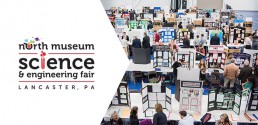
Record Number of Students in NM Science & Engineering Fair
Students compete in 73rd annual North Museum Science & Engineering Fair, presented by The Arconic Foundation
The 2026 NMSEF includes more than 250 student finalists, an increase of 39% over 2025 participation levels, and the largest level of participation since prior to the Pandemic.
(LANCASTER)—The public is invited to join families, fans and friends to see over 250 young scientists’ and engineers’ experimental projects as Lancaster and Lebanon County students in grades 6 through 12 as they present a diverse body of science projects at the North Museum Science & Engineering Fair (NMSEF), Thursday, March 12 at Millersville University. Student projects will be accessible to the public from 4pm to 6:30pm. The NMSEF Awards ceremony follows at 6:30pm.
The 2026 NMSEF includes more than 250 student finalists, an increase of 39% over 2025 participation levels, and the largest level of participation since prior to the Pandemic. More than 70 volunteers from a wide cross section of local educational institutions and STEM- focused businesses will judge the student projects representing 16 high schools and 12 middle schools.
The top two students’ projects from the NMSEF’s senior division—the Grand Champion and the Senior Champion—earn the right to travel to the International Science and Engineering Fair and compete with 1,700 of their peers from around the world in Phoenix, Arizona from May 9 through 15, 2026.
North Museum has been organizing the Science & Engineering Fair for 16 years, welcoming students in grades 6–12 from public, private, charter, online, parochial, and home schools. The NMSEF is one of just six fairs in Pennsylvania associated with the International Science and Engineering Fair (ISEF), the world’s largest international science competition for pre-college students.
“The North Museum is grateful for the ongoing generosity of our many sponsors, and their commitment to supporting access to STEM education opportunities for students in Lancaster and Lebanon Counties,” says Scott Downs, Director of Development and Strategic Partnerships. “We are also thankful for the outstanding contributions from our judges, volunteers and participating teachers and students.”
Dr. Dan Daneker, the museum’s Science Fair Coordinator, commented, “Seeing these young stemologists excited for their research is not only gratifying as a science teacher, but reassuring that the future is bright. The Science and Engineering Fair helps our young scientists and engineers learn if research is right for them. Coupled with the commitment of the local STEM community who rallies behind our students, the results are amazing!"
Those interested in sponsoring future science fairs to keep them free to all students should contact Scott Downs, Director of Development and Strategic Partnerships at sdowns@northmuseum.org.
The 2026 North Museum Science & Engineering Fair is sponsored by Electron Energy Company, Kenvue, Eurofins, the Lancaster County STEM Alliance, Matt Glick, Lancaster Area Sewer Authority, The Stangl Foundation and Millersville University.
List of Categories
NMSEF Categories (Senior Division)
- Animal & Behavioral Science
- Biochemistry & Biomedical Science
- Chemistry, Energy, & Materials Science
- Earth & Environmental Sciences
- Environmental, Engineering Technology & Robotics
- Microbiology
- Physics & Mathematics
- Plant Sciences
NMSEF Categories (Junior Division)
- Botany
- Consumer Science
- Earth Science
- Engineering
- Life Science
- Physical Science
###
A Slew of Seeds—LNP Home & Garden
North Museum has historic seed, plant specimen collection – and you can see parts of it soon
KARYL CARMIGNANI | For LNP | LancasterOnline
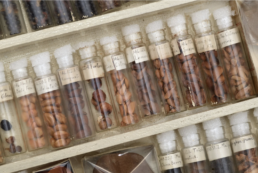
A collection of seeds from the North Museum, normally stored in the basement, will go on display March 20. Many of the seeds are tree nuts, including kumquat, lemon, grapefruit and tangerine.
Many Lancaster County families are already familiar with the North Museum’s natural wonders, from its live animal room to its planetarium. But did you know the museum is also home to well over 30,000 plant specimens — including a historic seed collection?

Molly Wolanski, exhibits and collection manager at the North Museum, knows the collection well. They’ve been with the museum since 2021, where their daily tasks can range from everything from “crocheting hats for dinosaurs, or dealing with an escaped snake,” Wolanski says. (The latter, by the way, has not happened since they upgraded the reptile enclosures.)
The pressed plants in the collection are mostly local specimens, Wolanski says. Dating back to the 1820s and 1830s and pressed onto paper just as old, they are exceedingly fragile. The seed collection came from a local dentist who had a penchant for plants. While the plant and seed collection is only available for research appointments, the public will soon get a glimpse of some of it.

Wolanski says they are excited to “pull vials of poisonous plant seeds” like castor beans for the upcoming exhibit “Nature Reimagined” open to the public March 20 through July 5. This exhibit explores the wild world around us through three smaller exhibits: Insects Reimagined, Journaling Nature and Poisonous Plants.
“This show features a variety of art forms featuring more traditional fine art media, fiber arts, and actual insects,” says Wolanski in an email. The Poisonous Plants portion explores the often maligned and feared plants we find in our world and the surprising history and science of these poisons, they add.
Plants featured will include poison hemlock, mountain laurel, rhododendron, deadly nightshade, and potato (the only edible part of the plant is the tuber; all green parts are toxic). Also, on display will be portions of the museum’s Materia Medica cabinet containing medicinal — and not-so-medicinal plants — from the 1800s, which was used in training new doctors in various remedies.
NATURE REIMAGINED
“Nature Reimagined,” opening March 20, will feature three exhibits: Insects Reimagined, Journaling Nature and Poisonous Plants. The latter will include 12 photographed pressed plant specimens from the herbarium. “Many people don’t realize how morbid natural history can be,” Wolanski says.
“Nature Reimagined” will include a cabinet from the 1890s which was used for pharmacy teaching. So many plants considered poison were used as medicine, Wolanski says. Or food. For instance, the “humble potato” is part of the deadly nightshade family (aka belladonna), a toxic perennial herbaceous plant, so centuries ago, folks were reluctant to eat it. “It took a while for the potato to become a culinary mainstay,” Wolanski says.
Groff’s seeds
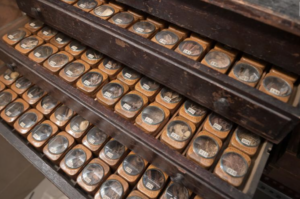
H.K. Groff, a local dentist, collected and methodically organized seeds in antique wooden cabinets. His “active collection and curation years” were 1939-1952, Wolanski says. Groff was also an ardent volunteer at the Stahr Hall Museum, the precursor of North Museum, and a passionate “amateur botanist,” the term used at the time. With 4,423 species of plants, the Groff seed collection represents species from around the country and beyond. “He tried to get a little of everything from around the world,” Wolanski says. Peering at the plethora of seeds, the diversity is unmistakable. Wolanski marvels at the different shapes of acorns: some are long and skinny, some short and round. The caps are also different.
“Often we look at plants in nature in isolation from their taxonomic relatives, and once they are grouped together it’s easier to compare and contrast their differences,” Wolanski says. The seed collection “is almost like a physical, nonportable field guide or library.”
The seed drawers are neatly divided with each vial and baggy (for jumbo seeds like acorns) labeled with a number indicating plant family, the species, and where it was collected. Wolanski says that Groff had a “unique numbering system”; the seeds are also listed in a modern-day spreadsheet. While Groff was an avid seed collector, seeds collected by other botanists have been stored with his, with some dating back to the 1860s collected by Abram P. Garber, adds Wolinski.
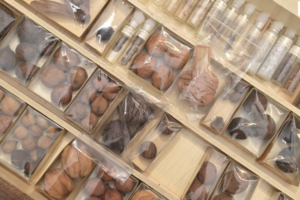
Wolanski says that while some botanists had “surprisingly nice handwriting,” it was still a relief when people started using a typewriter for specimen labels. They say that the pool of people able to read cursive handwriting is shrinking with many schools doing away with teaching cursive. But “1800s cursive is a different beast,” they add. Wolanski explains that the seeds in the collection are vintage seeds, not heirloom seeds which exist through Natural Selection. “This is a record of plant seeds from around the 1900s, au natural.”
The herbarium
In addition to the carefully catalogued seeds, the North Museum also has a significant herbarium — a collection of plant specimens and data used for scientific study. The 1986 keepsake book “The North Museum and the Natural History Tradition of Lancaster County” says that “given the size of the North Museum, the herbarium is impressive” and ranked it the fourth largest in the state of Pennsylvania.
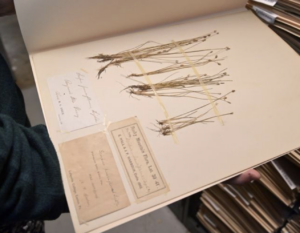
The herbarium contains flowering and non-flowering plants like ferns, mosses and algae. The seed collection has been “particularly useful to archaeologists as a reference for plant utilization by prehistoric American Indians,” says botanist Jane Grushow in the book. “The herbarium is in fact a testimony to the great plant diversity that once existed in Lancaster County. Sadly, many of the wild places recorded in the herbarium have been built upon, drained, or used as dumps or landfill, thus destroying the original plant life,” Grushow adds.
For instance, there are diverse seed specimens — 177 records — from the Dillersville Swamp, an area now covered in housing and mall development. Wolanski says the oldest specimen was collected in the 1860s by Thomas C. Porter, another renowned botanist.
“There are over 100 species represented in those 177 samples,” Wolanski says. “There are common garden favorites like pussy willow, orange coneflower, and black-eyed Susan, as well as other native species like skunk cabbage, goldenrod, and poison sumac.” Wolanski says they used to see murders of crows circling above in the Dillersville area. Could the birds be recalling their wild ancestral habitat of yesteryear? “In this time of rapid change, we need to know what was once there, to help protect what’s left,” Wolanski says.
A moss collection made by Thomas Porter, a professor at Franklin & Marshall College, are dehydrated specimens in individual packets. Wolanski says that moss pre-dates roots and seeds. “It’s one of the original forms of plant life on land.”
Be your own botanist
Plant specimens are no longer being added to the North Museum’s herbarium; rather, they are being preserved for future scientific endeavors. Wolanski says that while the amateur botanists documented where the specimen was collected, “they didn’t have specific geo-data back then.” These days, the exact longitude and latitude would be noted — a cell phone photo of the specimen contains the geo-data automatically.
Wolanski recommends the phone app iNaturalist for newbies to learn what they’re looking at by taking a photo. Once in the app, “your photo could be included in a research study.” Wolanski says SEEK is a good app for younger naturalists.
And, of course, a visit to the museum can help further bolster their scientific knowledge.
“We’re here, we exist, come visit North Museum to learn about the natural world and what we have before it’s gone,” Wolanski says.
KARYL CARMIGNANI | For LNP | LancasterOnline

Lancaster is Bugging Out!
Visit North Museum's Imagining Insects exhibition to see what everyone is bugging about!
Nov 5, 2025. LNP Entertainment Section front page coverage.


Fall Fest—Supporting STEM Education and Wildlife Restoration
North Museum’s Fall Fest at Millport Conservancy
benefits STEM Ed and Lititz Run Restoration

Family event Saturday, November 8, 10am–4pm
Families are invited to explore Millport Conservancy’s natural wonders on Saturday, November 8, from 10am to 3pm, as North Museum of Nature and Science and Millport Conservancy present Fall Fest. This 6th annual collaboration between two local non-profits is a fundraising event to support Millport Conservancy’s efforts to restore the Lititz Run stream through soil erosion control, wetlands restoration, and stream management and North Museum’s STEM (Science, Technology, Engineering and Math) education programming. The Conservancy’s 75-acre refuge for native wildlife and plant species includes Lititz Run, where preservation efforts have resulted in healthy, wild reproduction of both rainbow and brown trout, which can be found year-round in its waters.
NEW THIS YEAR—LIVE RAFFLE!
Grab a chance to win one of these spectacular experiences.
- Morning Fly Fishing lesson with Tom Herr, valued at $350
- North Museum Birthday Party Rental, valued at $275
- North Museum Family Membership w/gift basket, valued at $200
- Lancaster Bounce House Birthday Rental, valued at $250
- YMCA 3-month Family Membership, including join fee, valued at $279
- Universal Athletic Club 3-month Family Membership, valued at $950
Located at 737 E. Millport Road, the family-friendly event is filled with activities for children of all ages:
- Astronomy Experiments
- Archeological Treasure Dig Pit
- Atomic Selfie Station
- Environmental Science and Sustainability Activities
- Face and Pumpkin Painting
- Lancaster Bird Club Activities
- Live Reptile Petting Zoo
- Bird watching and forest foraging
- Solar Observing
- Veterans’ Recognition
- Food Truck by Gourmet Julie's Way
- Beer & Wine Tasting Room for 21+ with Bierhall Brewing Co. and Fetish Brewing Co.
“Millport Conservancy relies on the generosity of donors to help us protect and preserve the land, the water resources and our heritage.” said Lynn Wohlsen Myers, Executive Director of Millport Conservancy and the daughter of the Conservancy’s founding couple. “Through the success of fundraising efforts like Fall Fest, the Conservancy will continue to be a treasured resource of educational and recreational experiences for students and the public.”
“We're thrilled to hold Fall Fest at Millport again and to continue this successful partnership for a sixth year in our joint effort to raise funds for the restoration of Lititz Run." said Andrea Rush, North Museum CEO. "Our enduring alliance fortifies the missions of both organizations and accelerates our collective impact on the community."
In honor of Veteran’s Day, all Veterans, Active Service Members and First Responders will be admitted free of charge.
BUY TICKETS
Tickets may be purchased in advance or onsite, $20 for adults; $15 for children ages 4–17, free for children under 4.
Fall Fest 2025 sponsors include: Flyway Excavating, Inc., The Sheaffer Family, Marysia & Salvatore Dina, National Novelty Brush Co., Univest Financial, American Crane & Equipment Corp., Cargas, Richard Clark, Ph.D. & Sepi Yalda, Ph.D., First National Bank, Gibbel Kraybill & Hess, LLP, Land Studies, Landis Homes, Sauder’s Eggs, Dr. & Mrs. Charles J. DiComo, and Walters Services
Nov 5, Lititz Record


World Premiere Exhibition: Imagining Insects Opens September, 2025
IMAGINING INSECTS
BUY TICKETS HERE
Sept 2025–Summer 2026
Interactive exhibition includes live enclosures, rare pinned specimens, and 13-foot mantis

(LANCASTER)—From the North Museum of Nature and Science’s 360,000+ objects in its collections, a new exhibition brings forward its cache of Entomology treasures for Imagining Insects, opening on Saturday, September 27. Highlighting Apterygota (wingless insects) and Pterygota (winged insects) species, this show, presented in both English and Spanish languages, includes multiple live insect enclosures and rare and unique pinned specimens from the museum’s Entomology collections.

North Museum’s one-of-a-kind exhibition enables visitors to look closer at insects and marvel at the feats they can achieve and the wondrous ways they have evolved. Imagining Insects, fully curated and designed by North Museum, will explore what it means to be an insect and how we can take inspiration from their lives, bodies, and roles in the environment.
 Imagining Insects examines animals from a global level, then scales down to the anatomical structures that make them insects. Visitors will start by learning how and why scientists study insects before viewing insects in a broader human cultural context, then look at insects’ roles in the environment, from what they eat to how they reshape their landscape, to how some have evolved with complex social structures. A wall-mounted 24' long mantis replica reveals even more about insect anatomy and how their bodies are built.
North Museum’s Exhibits and Collections Manager Molly Wolanski explains,
“Visitors to the exhibition will learn answers to curious questions, like why do bumblebees buzz? Why are some bugs shiny? How do beetles climb walls and stick to surfaces? How can insects inspire you to create a better future? This is an opportunity to see unique specimens from the depths of the museum’s collections.”
The show will fascinate both adults and children of all ages, with interactive bug goggles, microscope, and art activities. Imagining Insects continues through Summer 2026.

Exhibition sponsors are Dr. Richard M. Fantazier, in memory of Robert J. Fantazier, and Oaktree Development Group.
Content Contributors: Jonathan Fantazier; Josh Kulak; Peter Licona

GSK Science in Summer–Success!
LANCASTER, PA AREA STUDENTS STEP INTO THE ROLE OF ATHLETIC TRAINERS, CARDIOLOGISTS, DIETITIANS, AND MORE WITH FREE SUMMER SCIENCE PROGRAM

GSK Science in the Summer™ Camps a Success in 2025. Over 7% more student participation compared to 2024.
Lancaster, PA. August 8 — GSK Science in the Summer™, a free science program for students in grades 2 through 6, returned in 2025 with a new theme: Be a Health Scientist!
This summer, nearly 1,000 children in the Lancaster area joined thousands more GSK Science in the Summer™ students nationwide as they learned the importance of space science through fun, hands-on, age-appropriate experiments at local community organizations. That's an increase in student participation by over 7% when compared to 2024!
The 100% free STEM enrichment program offered students the unique opportunity to become real scientists and engineers, engaging in hands-on activities that, in 2025, brought the world of health science to life. They discovered different career paths, from athletic trainer to epidemiologist, solved real-life problems, and built critical thinking skills—all while asking big questions like, what affects our health? How can we prevent illness? How do we help people heal?
Supported by GSK and led by The Franklin Institute, the program was administered through: Lampeter-Strasburg SD, Lancaster Public Library, Manheim Township Parks, The Mix, and YMCA of the Roses. The 100% free STEM enrichment program, now in its 39th year, estimates a reach of 23,400 students across 450 organizations in under-resourced communities while it provided professional training to approximately 500 educators, helping them develop skills to provide high-quality informal STEM experiences for youth nationwide.
Through hands-on activities, students took on the roles of athletic trainers, cardiologists, dietitians, epidemiologists, and orthopedic doctors. They designed tools to unclog arteries, test beverages for vitamin C, track how illness spreads through communities, and more—all while practicing scientific skills like observation and hypothesis testing.
Each Be a Health Scientist! activity told a story that invited students to play the role of someone in that field.
Be an Athletic Trainer: Members of a sports team report various knee problems during training. Students tested the strength and mobility of their knee joints using models and chose appropriate training exercises for each player to improve their knee function.
Be a Cardiologist: A person with heart problems has been diagnosed with a blockage in one of their arteries. Students used a model to investigate how the blockage affects blood flow in the artery and then designed a tool to clear the blockage and improve the patient’s blood flow.
Be a Dietitian: A patient needs more Vitamin C in their diet but struggles to find ways to get it. Students tested the Vitamin C content of drinks to see which one(s) can help the patient the most.
Be an Epidemiologist: An illness is spreading through a school community, and it is the student’s job to find out what is going on. They used a model to explore how illnesses spread, locate the source, and suggest ways to prevent it from spreading further.
Be an Orthopedic Doctor: A hockey player has broken a tibia bone in their lower leg. Students designed and tested a solution for keeping the broken bone aligned and supported while it heals.
GSK Science in the Summer™ was created in Philadelphia as part of GSK’s commitment to supporting accessible STEM education, and the program has reached more than 400,000 children across the US since its launch.
“By bringing scientific concepts to life through fun, hands-on learning opportunities, GSK Science in the Summer™ gives students tangible examples of the types of STEM career paths they can pursue in their future,” said Maya Martinez-Davis, President, US at GSK. “We see the power of science in action every day at GSK, and we’re proud to help inspire the next generation of scientists through this program.”
“GSK Science in the Summer™ aims to increase youth interest and confidence in doing science and pursuing STEM careers, especially those in under-resourced communities,” said Dr. Darryl Williams, Senior Vice President of Science, Education, and HR at The Franklin Institute. “The Franklin Institute recognizes that when youth have high-quality, positive STEM experiences outside of the school setting with educators with whom they closely identify, it increases their positive STEM identity and allows them to see themselves as belonging in science, and year after year, this program excels at doing that."
The Franklin Institute develops the GSK Science in the Summer™ curriculum, freely available at scienceinthesummer.fi.edu.
Note to Editors/Press Kit: Be A Health Scientist! Images
North Museum of Nature and Science
Now in its 72nd year, the North Museum of Nature and Science impacts thousands of central Pennsylvania students and their families annually through its education initiatives in the Museum, in the community, and at home. Programs include field trips, early childhood education programs, summer camps, the Science and Engineering Fair for middle and high school students, and many other educational programs designed to create access to free and reduced-cost STEM learning opportunities, and strengthen the foundation of youth in the Lancaster community and beyond.
The Franklin Institute
Located in the heart of Philadelphia, The Franklin Institute is a renowned and innovative leader in the field of science and technology learning, as well as a dynamic center of activity. As Pennsylvania’s most visited museum, it is dedicated to creating a passion for learning about science by offering access to hands-on science education. For more information, visit www.fi.edu.
GSK
GSK is a global biopharma company with a purpose to unite science, technology, and talent to get ahead of disease together. For further information, please visit www.us.gsk.com.
MEDIA CONTACTS:
Stefanie Santo, The Franklin Institute, 215.448.1152, ssanto@fi.edu
Kate Kanaby, GSK, 484.843.0993, kate.l.kanaby@gsk.com
###
The Art Gallery posts Open Call For Art—Entry Deadline: Sept 12
OPEN CALL FOR ART — HEXAPODAN DAYS
Insects surround us. Whether beneficially pollinating our gardens or spreading disease, insects leave their mark. They forage, they swarm, they camouflage, they predate. They communicate and learn socially, they metamorphosize, they create a hive mind. They help us mark the seasons, they challenge our picnics, and inspire us to create science fiction movie monsters. Gardens are habitat for insects. They are mini ecosystems or even wild places within the footprint of our domestic space. From as small as a container to as large as a meadow, the garden is a refuge for wildlife and a place to contemplate nature.
Does your work look to the natural world and our place within it? Do you contemplate the future of biodiversity in our wild spaces?
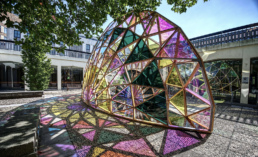
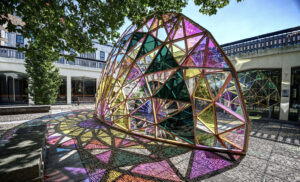
Artist Luke Jerram says, “Referencing the stained glass windows and bell towers of the Duomo in Florence, Palm Temple is both an experimental optical pavilion and a contemplation space designed for the public to consider the impact humanity is having on nature.”
Where do you go to contemplate nature? When you look to insects what do you find? When have you felt awe in the presence of Hexapoda?
The North Museum of Nature & Science invites regional artists to explore their relationship to the insect world, gardens, and our greater impact on biodiversity found within wild spaces more broadly. Diverse interpretations are encouraged. All details and requirements are in the Application Form below.
Eligible Work: Original 2d artworks created within the last three years solely by the artist.
Eligible mediums include:
- Paintings
- Drawings
- Pastel
- Collage
- Mixed media
- Monotypes
- Etching
- Photography
- Digital photography
- Digital painting
- Low relief works that project no more than about 4 inches from the wall.
ART SUBMISSION FORM LINKED HERE
Entry Deadline: Sept 12
Jury results: Sept 16
Exhibit: Oct 2–Jan 5
Molly Wolanski, Exhibits and Collections Manager

Welcome our new Live Animal Room Resident...
Welcome Hisstopher, the Plains hognose snake!
 Our heartfelt thanks to Jason at @hog_alchemy for generously donating our new hognose snake—the newest Live Animal Room resident! This baby western hognose snake made his public debut on August 4 after we asked you, our visitors, to vote for his new name.
Species info:
Plains hognose snakes (Heterodon nasicus) are native to North America, especially around the Great Plains region, in areas with loose, sandy soil. Toads are their preferred prey, but they have also been documented eating other things such as amphibians, small rodents, and eggs. When hognose snakes feel threatened, they flatten their head and neck, hiss, and bluff strike. If that doesn’t give a predator pause, they may play dead! This performance includes writhing around, musking, and finally freezing belly-up until the threat passes.
What makes Hissstopher special:
Hissstopher was donated to the North Museum by Jason at Hog Alchemy in July 2025. He hatched on May 29th, 2025, so he’s just a baby! He is a little nervous around people still, but is quickly adjusting to museum life.
LEARN MORE about Hisstopher and all of the 20+ Live Animal Room residents!